
Bookkeeping is one of the most important responsibilities in running a small business—yet it’s also one of the most misunderstood. Many owners handle their own books out of necessity, not because they feel confident with accounting rules or financial reports.
Staying compliant, avoiding penalties, and understanding where your money goes all begin with a dependable bookkeeping system. Accurate records don’t just protect your business—they empower better decisions.
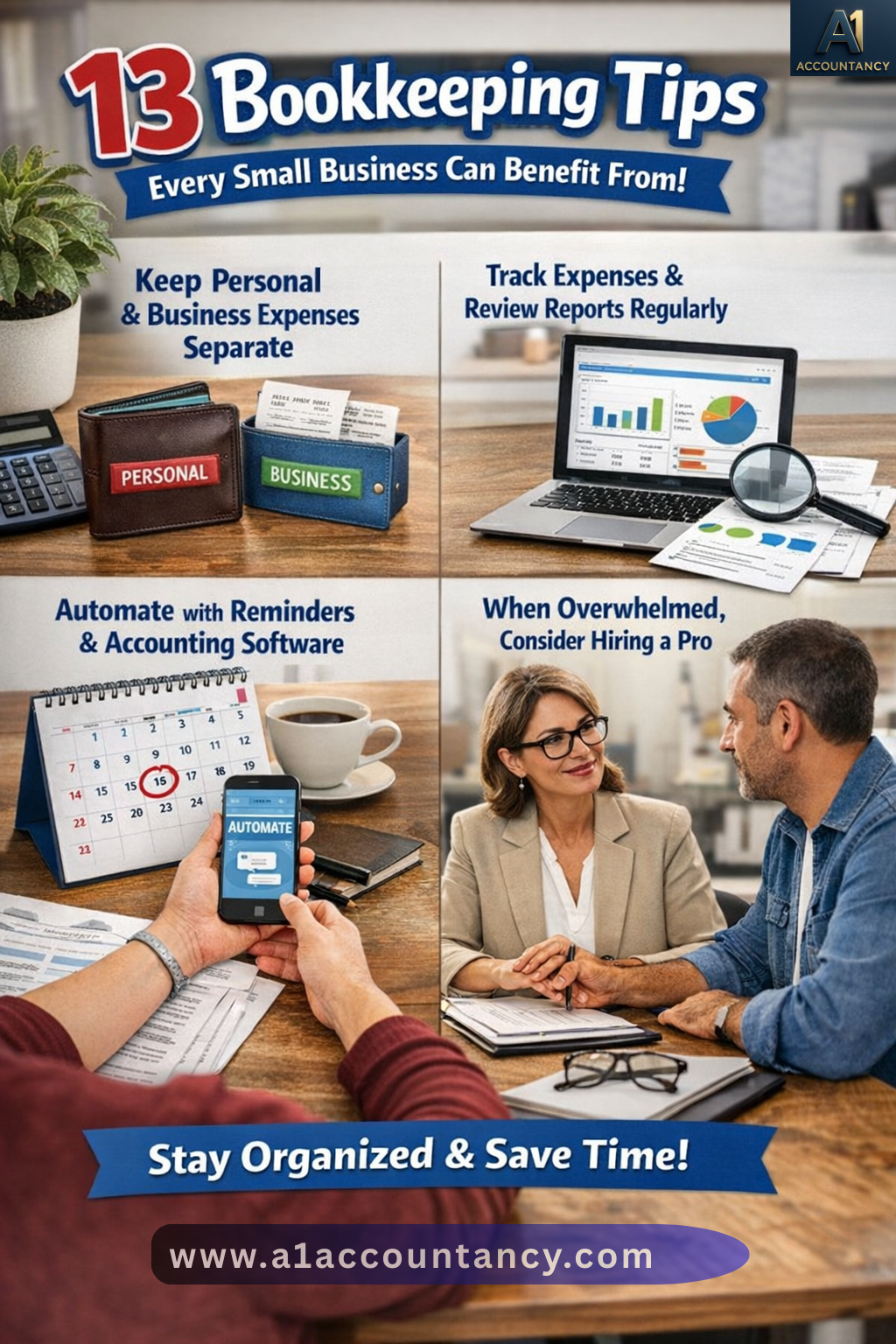
Below are 13 practical bookkeeping tips designed to help small business owners build strong, reliable financial habits.
- Learn the fundamentals of bookkeeping
A solid understanding of bookkeeping basics makes managing finances far less intimidating. Knowing how concepts like accrual vs. cash accounting or the matching principle work allows you to read reports with confidence and spot issues early.
Equally important is understanding common financial terms so income statements, balance sheets, and cash flow reports actually make sense. Staying informed about current best practices ensures your bookkeeping remains compliant and efficient.
Core bookkeeping steps
• Record every financial transaction, including sales, expenses, and bill payments
• Categorize transactions correctly (income, expenses, assets, liabilities, equity)
• Organize receipts and documents with clear labels
• Reconcile your records with bank and credit card statements regularly
Strong habits in these areas help keep your books accurate and audit-ready.
Ways to strengthen your bookkeeping skills
• Improve accounting knowledge by learning double-entry bookkeeping and financial statements
• Practice explaining financial results in simple terms to partners or advisors
• Stay current by exploring new accounting tools, courses, or certifications
- Keep personal and business finances separate
Mixing personal and business transactions creates confusion and increases audit risk. Separate business bank accounts and credit cards make tracking expenses easier and protect your deductions.
If your business is registered as an LLC or corporation, a dedicated business account is often required. Even for sole proprietors, separating finances from day one saves time and stress during tax season.
- Build a simple and consistent record-keeping system
Consistency is the key to effective record keeping. Start by identifying what documents you need to track—receipts, invoices, bills, contracts, and statements.
Create clear categories such as rent, utilities, payroll, inventory, and marketing. This structure makes it easier to retrieve information when needed.
Common record-keeping methods
• Paper files: Physical folders organized by date or category
• Spreadsheets: Excel or Google Sheets for businesses with low transaction volume
• Accounting software: Automated tools that import, categorize, and report transactions
No matter the method, update your records on a weekly or monthly schedule to stay accurate.
- Use reminders to meet deadlines
Missing tax or compliance deadlines can lead to penalties and unnecessary stress. Digital calendars and accounting software can help you stay on track.
Set recurring reminders for payroll taxes, estimated tax payments, sales tax filings, and annual reports so nothing slips through the cracks.
- Maintain a clear audit trail
An audit trail documents every transaction from start to finish. Keep receipts, invoices, and payment confirmations linked to each entry in your books.
Regular reviews help you catch missing or incorrect information early, ensuring transparency and accuracy if your records are ever examined.
- Understand and analyze your expenses
Tracking expenses over time reveals spending patterns that may not be obvious day to day. Regular reviews can help you: – Eliminate unused subscriptions – Find cost-effective alternatives – Negotiate better vendor pricing
Knowing where your money goes allows you to redirect funds toward growth and profitability.
- Generate financial reports regularly
Monthly financial reports provide a snapshot of your business’s performance. Key statements include: – Income statement – Balance sheet – Cash flow statement
Important metrics to watch include profit margins, debt-to-equity ratio, and inventory turnover. These insights help guide pricing, cost control, and growth strategies.
- Track cash transactions carefully
Cash transactions are easy to overlook, yet they directly impact cash flow accuracy. Record every cash sale and purchase, issue receipts, and reconcile totals with bank deposits.
Mobile receipt-scanning apps can help capture small cash expenses instantly, reducing lost documentation.
- Budget and plan for the future
Budgeting and forecasting help you plan instead of react. A clear budget allows you to manage cash flow, prepare for expenses, and evaluate expansion opportunities.
Plan ahead for taxes
Estimate tax obligations throughout the year and set aside funds regularly. Staying informed about tax rule changes helps ensure accurate planning and deductions.
Use financial forecasts
Forecasts project future revenue, expenses, and cash needs based on historical data and market trends. They’re also valuable when seeking loans or investors.
- Consider hiring a professional bookkeeper
If bookkeeping consumes too much of your time, outsourcing may be a smart investment. A professional bookkeeper can: – Keep your records accurate and up to date – Correct errors and improve organization – Prepare reliable financial statements – Support loan or investor applications
Most importantly, they help you understand your business’s true financial position.
- Review financial statements consistently
Comparing financial statements across months or years highlights trends in revenue, expenses, and profitability.
Balance sheet reviews reveal changes in assets, liabilities, and equity, helping you assess financial strength and risk. These insights support better strategic decisions.
- Protect your data with regular backups
Financial data is too important to lose. Use secure cloud storage combined with automatic backups to protect against hardware failure or cyber threats.
Keeping multiple copies—both cloud-based and physical—adds an extra layer of security and peace of mind.
- Use cloud-based accounting software
Modern cloud accounting software simplifies bookkeeping by automating data entry, categorization, reporting, payroll, and invoicing.
Cloud access allows you to view your financial data anytime, anywhere, while reducing errors from manual processes. Tools like QuickBooks Online help businesses stay organized, compliant, and scalable.
Focus on growth, not paperwork
By following these bookkeeping tips, small business owners can build a reliable financial foundation, reduce compliance risks, and make smarter decisions. With the right systems and support in place, you’ll spend less time managing books—and more time growing your business.