
Preparing business tax returns doesn’t have to be stressful—but it often becomes overwhelming when records are incomplete or disorganized. Many tax issues, penalties, and missed deductions stem from one simple problem: poor documentation throughout the year.
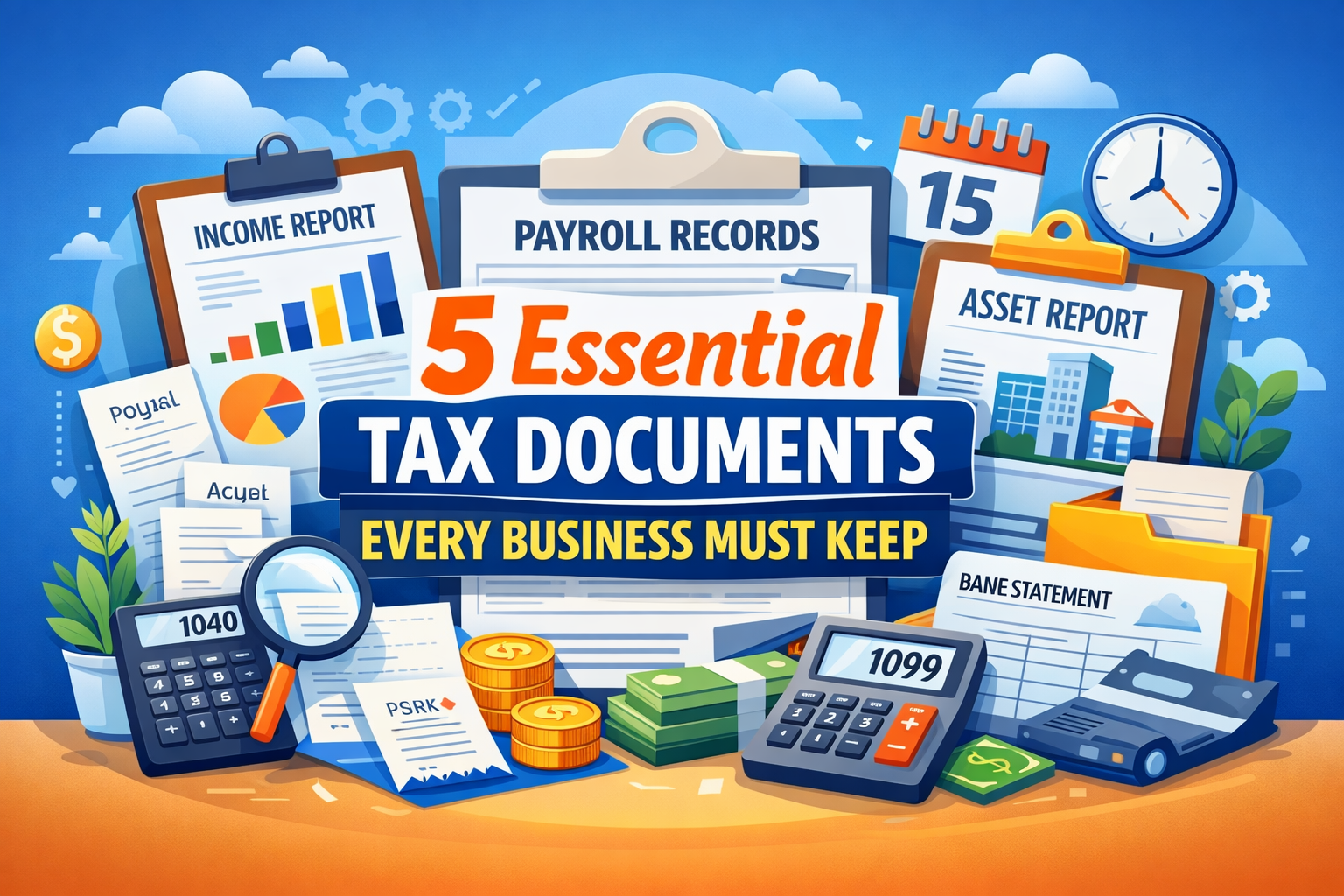
Maintaining the right tax documents is not just about compliance. It helps ensure accuracy, protects your business during audits, and allows you to take full advantage of legitimate tax deductions. In this guide, we break down the five most important tax documents every business should keep and explain how proper recordkeeping can make tax season smooth and efficient.
Why Accurate Tax Records Are Critical for Every Business
Strong documentation is the foundation of reliable tax filing. When your records are complete and well-organized, you benefit in several ways:
- Accurate reporting with fewer errors
- Maximum deductions and credits backed by evidence
- Reduced audit risk and faster responses to IRS inquiries
- Less stress during tax season
- Better financial decision-making year-round
Whether you’re a startup, small business, or growing enterprise, consistent recordkeeping ensures your tax returns reflect your true financial position.
1. Income Records: Proof of What Your Business Earned
What Counts as Income Documentation?
Income records show how much money your business generated during the year. These typically include:
- Sales invoices and customer receipts
- Bank deposit records
- Credit card and payment processor reports (Stripe, PayPal, Square, Shopify, etc.)
- Cash sales logs
Why Income Records Matter
The IRS closely monitors income reporting. Missing or inconsistent income records can raise red flags and increase audit risk. Proper documentation ensures that all revenue is reported accurately—no more, no less.
Best Practices
- Use accounting software that automatically tracks income
- Keep business and personal accounts completely separate
- Reconcile income monthly against bank statements
2. Expense Records: The Key to Reducing Tax Liability
Common Business Expense Categories
Businesses often incur expenses such as:
- Office supplies and equipment
- Rent, utilities, and internet
- Software subscriptions and cloud services
- Advertising and marketing costs
- Business travel and meals (where applicable)
Why Expense Documentation Is So Important
Expenses reduce your taxable income—but only if they are properly documented and classified as “ordinary and necessary.” Without receipts or clear records, deductions may be denied during an audit.
Best Practices
- Store receipts digitally using cloud-based tools
- Use expense-tracking apps connected to your bank or credit card
- Review expense categories monthly for accuracy
3. Payroll and Contractor Records: Staying Compliant with Labor Taxes
Employee Payroll Records
If you have employees, you must maintain:
- Payroll registers
- W-2 forms and payroll tax filings
- Records of tax withholdings and benefits
- Employer tax payments (Social Security, Medicare, FUTA)
Independent Contractor Records
For freelancers and contractors, businesses must track:
- Contractor agreements
- Payment records
- Issued 1099-NEC forms (for eligible payments)
Why These Records Are Essential
Worker misclassification is a major IRS compliance issue. Clear payroll and contractor records protect your business from penalties, back taxes, and legal disputes.
Best Practices
- Use payroll software or a managed payroll service
- Keep signed contracts for all contractors
- Separate payroll expenses from other operating costs
4. Bank and Financial Statements: Verifying Your Numbers
Key Financial Statements to Keep
- Monthly bank statements
- Credit card statements
- Loan and line-of-credit statements
- Interest and fee summaries
Why Financial Statements Matter
These documents act as third-party verification of your financial activity. They help confirm income and expenses and are often the first documents requested during an audit.
Best Practices
- Perform bank and credit card reconciliations every month
- Maintain secure digital backups
- Track loan interest separately for potential deductions
5. Asset and Depreciation Records: Maximizing Long-Term Deductions
What Are Business Assets?
Business assets typically include:
- Vehicles used for business purposes
- Machinery and equipment
- Computers and technology
- Commercial property or office space
Depreciation Documentation
Assets are usually deducted over time through depreciation. Records should include:
- Purchase date and cost
- Business-use percentage
- Depreciation method used
- Annual depreciation schedules
Why These Records Matter
Depreciation deductions are commonly reviewed during audits. Clear asset records ensure accurate tax calculations and long-term compliance.
Best Practices for Organizing and Storing Tax Documents
Go Digital
Cloud-based storage and accounting platforms are now standard best practice. They improve accessibility, security, and disaster recovery.
Maintain a Consistent System
Organize documents by year and category (income, expenses, payroll, assets). Consistency saves time and reduces errors.
Retain Records Appropriately
Most tax documents should be retained for at least 3–7 years, depending on the document type and tax regulations.
Common Tax Recordkeeping Mistakes to Avoid
- Mixing personal and business finances
- Missing receipts or incomplete documentation
- Inconsistent monthly reconciliations
- Ignoring changes in tax regulations
- Relying solely on bank statements without categorization
Avoiding these mistakes significantly reduces audit exposure and filing errors.
Preparing for Audits and Ongoing Compliance
Audits can happen due to inconsistencies, unusually high deductions, or randomly. Audit-ready businesses typically have:
- Well-organized, easily accessible records
- Clear explanations for large transactions
- Professional bookkeeping and tax support
Being prepared year-round is far easier than scrambling after an audit notice arrives.
Making Tax Filing Easier with Technology and Expertise
Use Automation
Modern accounting software integrates directly with banks, payment processors, and payroll systems—saving time and improving accuracy.
Consider Professional Support
For growing or complex businesses, working with experienced bookkeeping and tax professionals can:
- Optimize deductions
- Ensure compliance
- Reduce risk and stress
File on Time
Late filings often lead to penalties and interest. Proactive preparation is the best way to stay ahead of deadlines.
Final Thoughts
Keeping the right tax documents is not optional—it’s essential for running a financially healthy business. From income and expenses to payroll, bank statements, and asset records, each document plays a critical role in accurate tax reporting.
Key Takeaways:
- Income records ensure correct revenue reporting
- Expense documentation supports valid deductions
- Payroll and contractor records maintain labor compliance
- Financial statements verify your bookkeeping
- Asset and depreciation records maximize long-term tax benefits
By adopting digital tools, reconciling accounts regularly, and maintaining organized records, businesses can transform tax season from a stressful obligation into a smooth, predictable process.
Strong documentation today leads to fewer problems tomorrow—and sets the foundation for successful business tax filings year after year.